

Many use white noise for better sleep, but volume matters more than people think. A sound that is too loud can disrupt rest instead of improving it.
The ideal white noise volume for sleep is between 40 and 50 decibels, similar to soft rain. Anything louder may cause ear fatigue, sleep fragmentation, or long-term hearing discomfort.
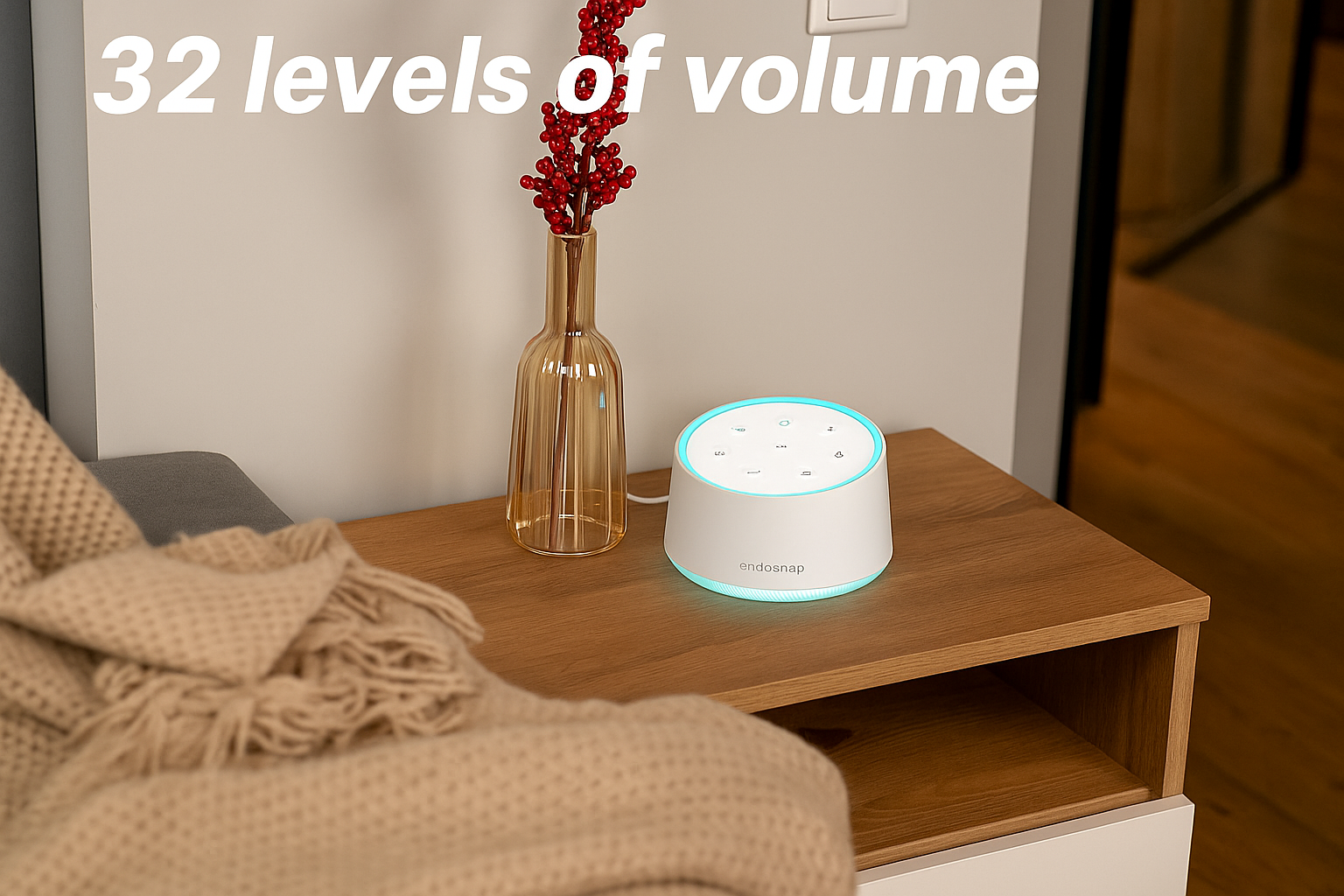
White noise should serve as a background mask, not a dominant force. When volume is too high, it overwhelms the body’s natural rhythms and reduces the benefits of acoustic masking. This guide outlines how to set proper levels and explains why production quality is key.
What Happens If White Noise Is Too Loud?
White noise at excessive volume may disturb more than it soothes. Instead of helping the brain relax, it can create tension, restlessness, and hearing stress.
High-volume white noise can interfere with REM cycles, cause mild tinnitus, and reduce morning recovery.
| Problem Type | Description |
|---|---|
| REM disruption | Loud background prevents transition to deep sleep |
| Auditory overload | Constant high output may lead to ringing or ear pressure |
| Over-dependence | Difficulty sleeping without loud noise once adapted |
What Is the Recommended Volume Level in Decibels?
Volume levels are measured in decibels (dB). For sleep, the ideal range allows masking external noise without creating a new disturbance.
Experts recommend 40–50 dB for sleep, which is roughly equal to light rain or a quiet library.
| Decibel Range | Description | Use Recommendation |
|---|---|---|
| 30–40 dB | Whisper, calm nature sounds | Very safe, gentle masking |
| 40–50 dB | Soft fan, light rain | Ideal for most sleep environments |
| 50–60 dB | Busy street, louder fan | May disrupt rest if used overnight |
How to Measure and Adjust White Noise Volume?
Most people do not have a decibel meter at home. However, basic tools and common sense can help approximate safe levels.
Use a smartphone dB meter app or perform the conversation test: if voices must be raised, the noise is too loud.
| Method | How to Use |
|---|---|
| dB Meter App | Place phone on pillow to measure noise at ear level |
| Conversation Check | Speak normally while noise plays; if voice must rise, reduce |
| Morning Sensitivity | Any ear pressure or ringing may signal excessive volume |
Why Is Manufacturing Quality Important for Sound Safety?

White noise safety depends on more than user volume control. The machine’s internal design influences consistency, clarity, and output safety.
Well-made machines deliver stable volume, avoid harsh frequency spikes, and maintain performance during long hours of use.
| Production Factor | Role in Safe Output |
|---|---|
| Amplifier calibration | Prevents excessive gain or sudden volume changes |
| Speaker quality | Ensures clean, even frequency distribution |
| Circuit insulation | Blocks electrical noise that may mimic high-frequency hum |
| Continuous testing | Verifies that sound remains stable after 8–12 hours |
How Factory Capabilities Enhance Product Reliability?
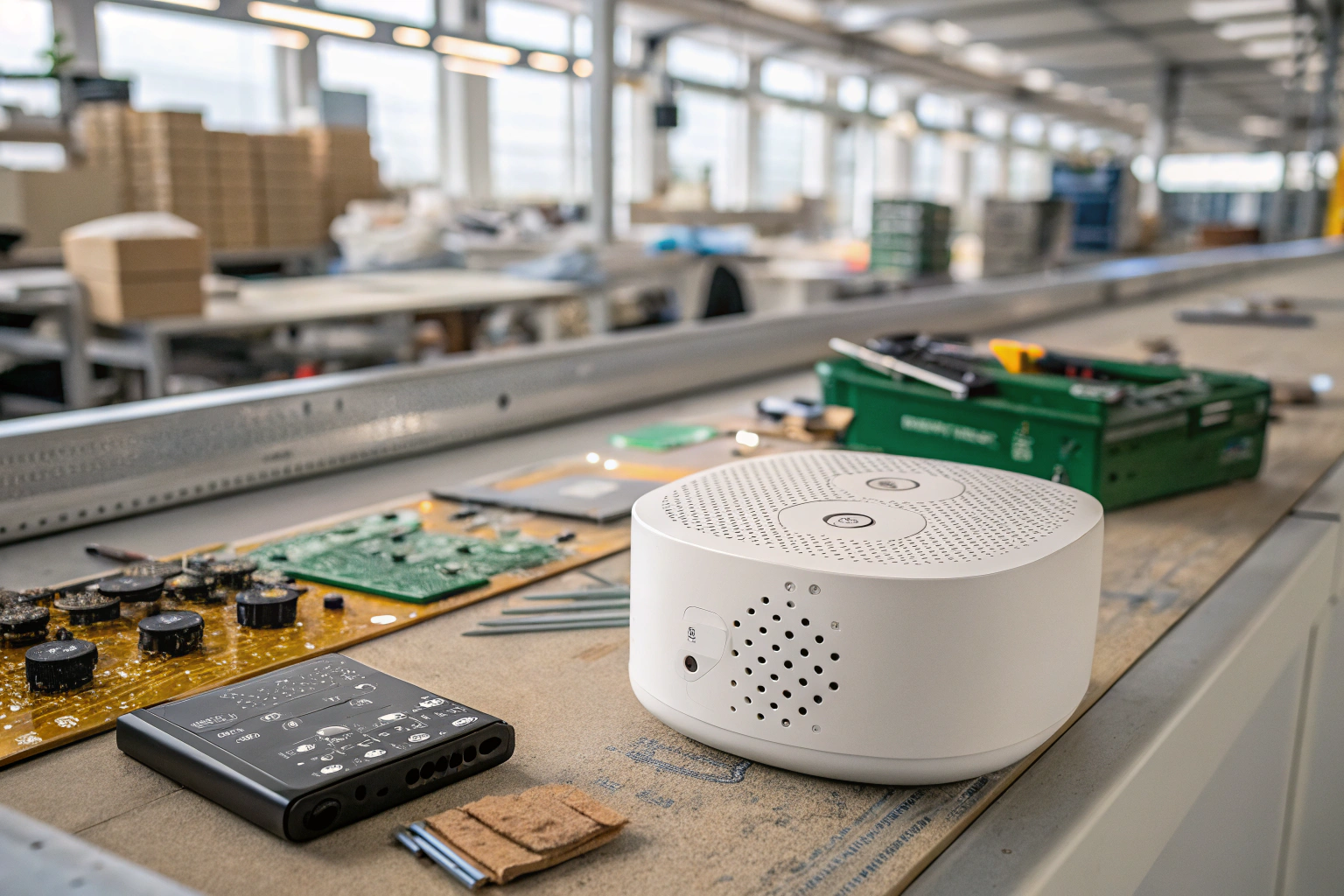
Factories that control tooling, component selection, and testing can ensure better overnight performance. Manufacturing precision makes it easier to set and trust safe volume limits.
In-factory tuning allows decibel locking, balanced frequency shaping, and feature integration like smart fade-out timers.
| Factory Feature | Benefit for End Users |
|---|---|
| OEM volume limit | Prevents unsafe high-output levels |
| Frequency response tuning | Adjusts for comfortable tone balance |
| Component sourcing | Avoids low-grade speakers that introduce harshness |
| Final QC sound check | Confirms low, steady output before packaging |
Conclusion
White noise should never be loud enough to disturb or overwhelm. Keeping sound levels in the 40–50 dB range supports sleep without risk. Good sleep begins with smart sound control.
As a professional manufacturer, every machine is developed with precise internal tuning, volume calibration, and safety testing. Product development follows a closed-loop system from speaker selection to overnight testing, ensuring sound remains soft, even, and consistent. Customization options include volume locks, pink noise presets, and packaging design. Visits to the factory are welcome to review production lines and explore custom solutions for retailers and distributors.