

White noise is meant to help people sleep better, but can playing it all night actually backfire?
If white noise is too loud, poorly balanced, or too constant, it can disrupt sleep by preventing deeper brain rest — especially in the REM stage.
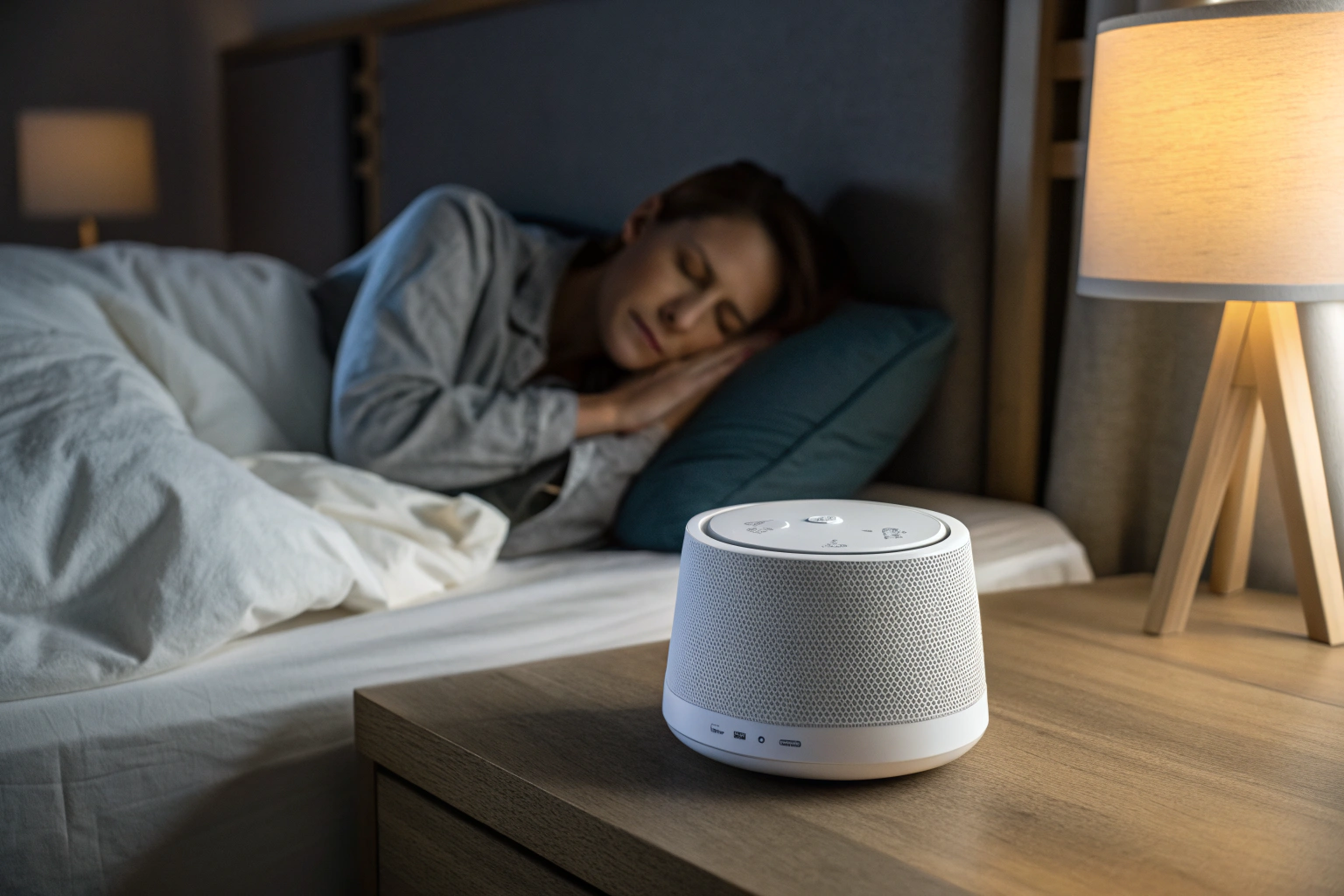
This article explores how white noise affects different sleep phases, when it might interrupt rest, and how well-designed machines minimize those risks.
How Does White Noise Affect the Brain During Sleep?
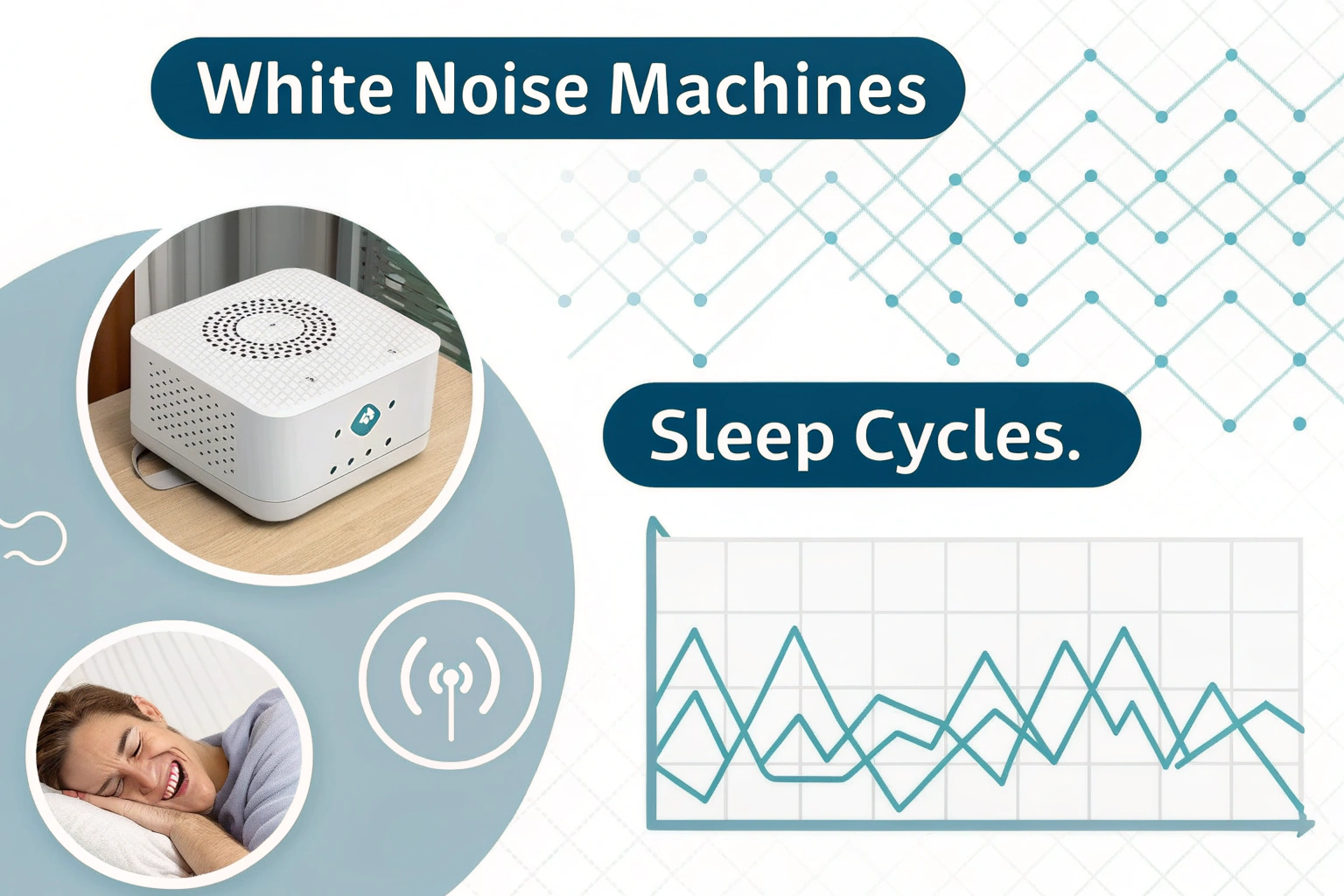
White noise masks environmental disturbances and supports sleep onset, but the brain still processes sound while asleep.
If the noise is poorly tuned, overly sharp, or continuous at high volume, it may interfere with normal brain activity.
| Sleep Phase | White Noise Effect |
|---|---|
| Light sleep (N1/N2) | Helps block outside sounds |
| Deep sleep (N3) | Can maintain stable rest if volume is low |
| REM sleep | May interrupt dreaming or memory processing if too loud |
Our machines use soft-tone pink and brown noise profiles to reduce cognitive load during later stages of sleep.
What Keeps You Awake Instead of Helping?
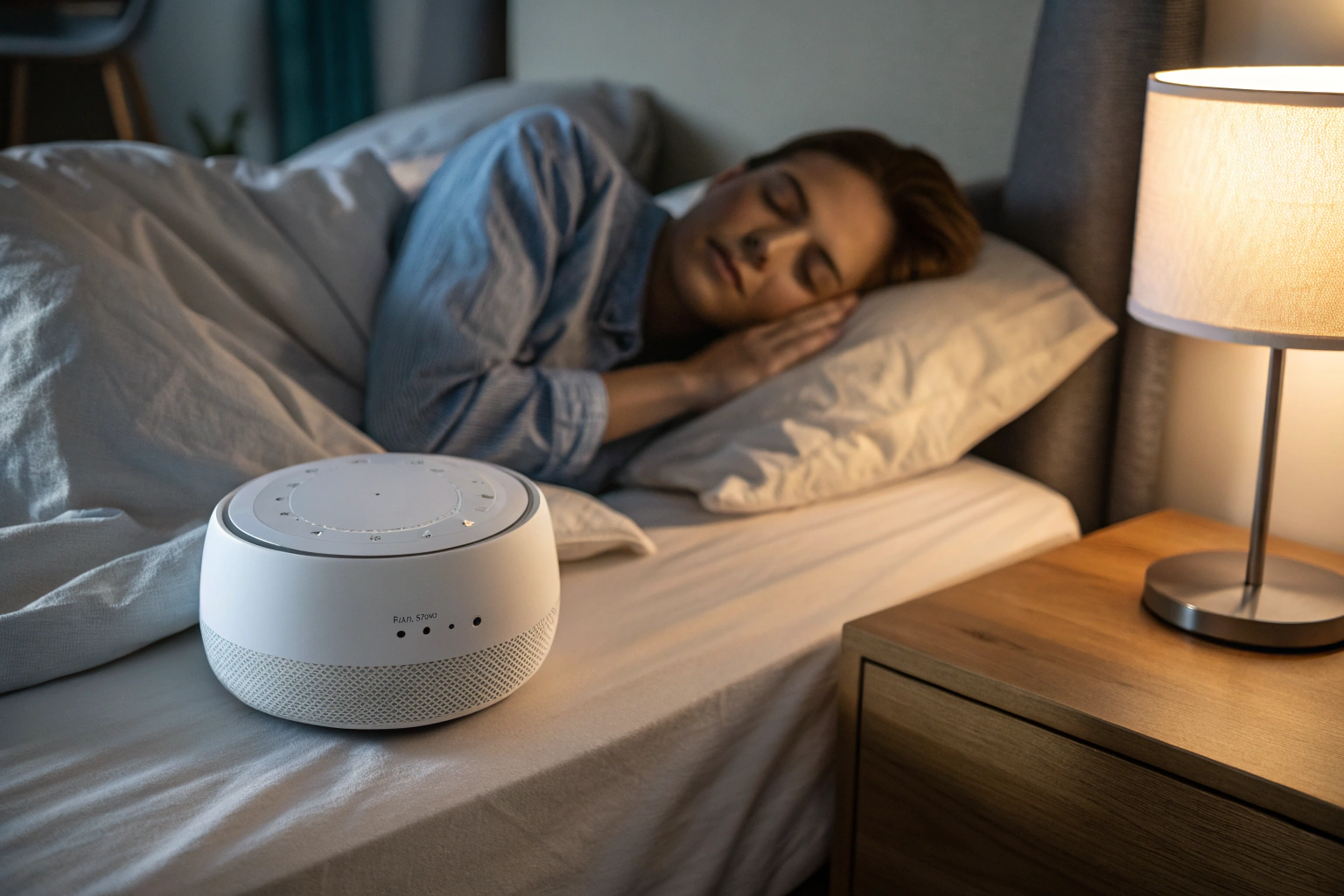
The biggest problems come from bad machine design or improper use — not white noise itself.
Common issues include repetitive loops, overly bright high frequencies, and sudden volume changes.
| Disruption Type | Cause |
|---|---|
| Brain fatigue | Harsh white noise with no frequency shaping |
| Alertness trigger | Unexpected sound loops or digital glitches |
| Volume spikes | Poor quality speakers or unstable power supply |
We manufacture machines with continuous playback chips and audio smoothing technology to avoid these problems.
Should You Use White Noise All Night?

It depends on personal sensitivity. Some people benefit from full-night use, while others sleep better when it fades out after they fall asleep.
Experts recommend using fade-out timers or switching to gentler noise after the first few hours.
| Sleep Type | Sound Use Recommendation |
|---|---|
| Light sleeper | White noise for full night at low volume |
| Deep sleeper | Use for first 1–2 hours, then fade out |
| Noise-sensitive | Brown noise or pink noise, not static-heavy |
We include built-in smart timers and fade control features to match these preferences.
Can the Brain Adapt Over Time?
Yes, but that’s not always a good thing. If the brain gets used to white noise, it may struggle to rest without it — or may stop responding to it effectively.
Over time, users may need to adjust volume or noise type to avoid diminishing returns.
 |
Long-Term Tip | How It Helps |
|---|---|---|
| Switch between noise types | Prevents audio fatigue | |
| Reduce use 1–2 nights/week | Preserves brain sensitivity | |
| Use dynamic sound profiles | Feels more natural than flat white noise |
Our product line supports pink, brown, and natural environmental sounds to support long-term usability.
Conclusion
White noise helps most people fall asleep, but playing it all night at high volume or with poor sound design can interfere with deep rest. The key is to keep volume low, use fade-out features, and choose calming tones.
We design and manufacture white noise machines with full-night safety, acoustic tuning, and precision features that protect sleep quality. You're welcome to visit our factory or request custom product solutions that match user needs across sleep cycles.