

White noise can help you fall asleep — but is it a good idea to let it play until morning?
Leaving white noise on all night isn’t always necessary. Overexposure, especially at high volume or poor quality, may interfere with sleep cycles and lead to auditory fatigue.
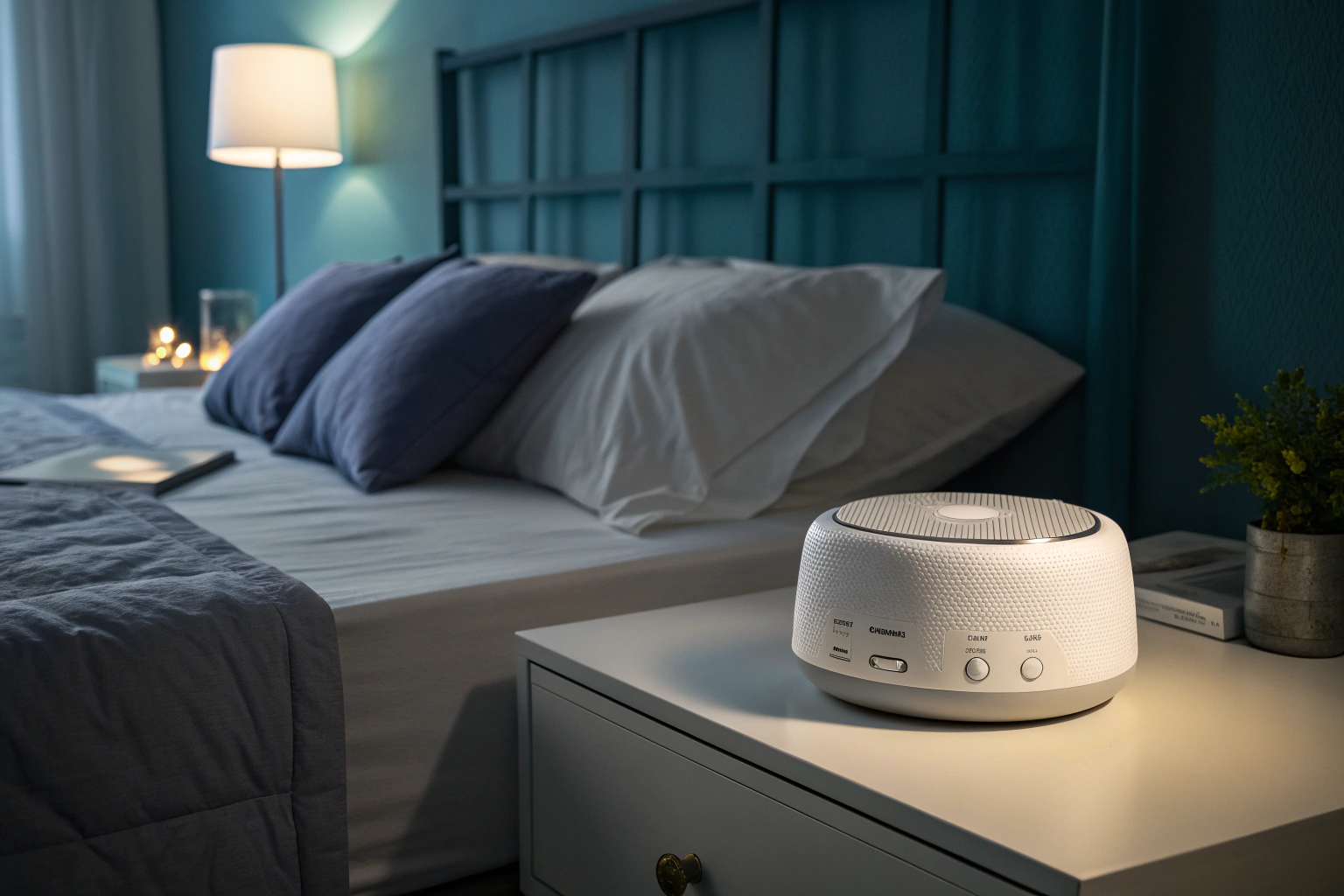
This article explains when continuous white noise is helpful, when it becomes harmful, and how manufacturing design prevents potential issues with long playback.
When Is All-Night White Noise Helpful?
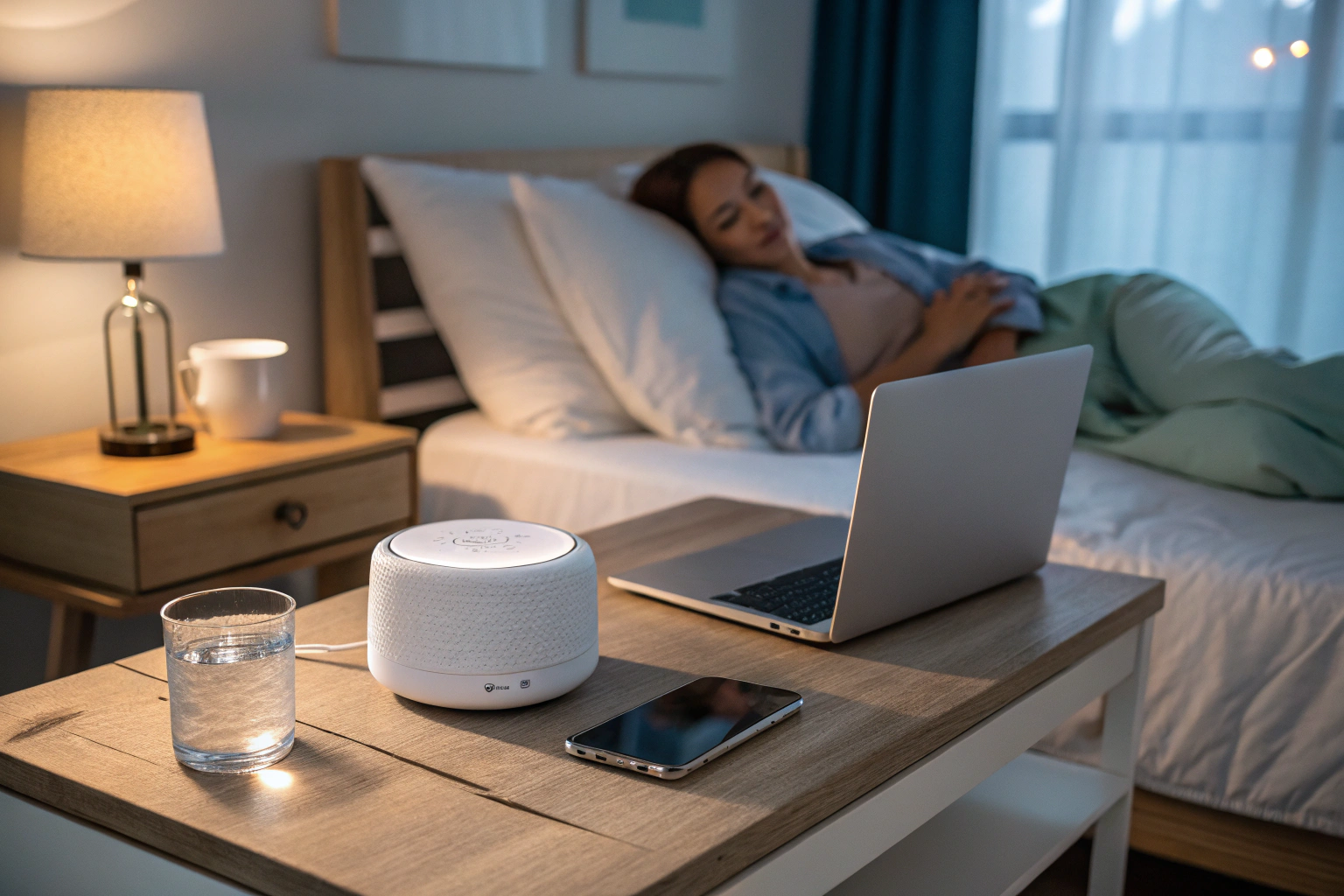
In environments with unpredictable noise — traffic, snoring, pets — white noise can mask sounds effectively throughout the night.
Consistent background sound reduces the chance of waking from sudden disturbances.
| Situation | All-Night Playback Recommended? |
|---|---|
| Urban apartment | Yes, for masking city sounds |
| Shared bedroom | Yes, if partner noise is disruptive |
| Quiet countryside | Not necessary |
We engineer machines with stable output and no audio looping glitches for safe overnight operation.
What Are the Risks of All-Night White Noise?
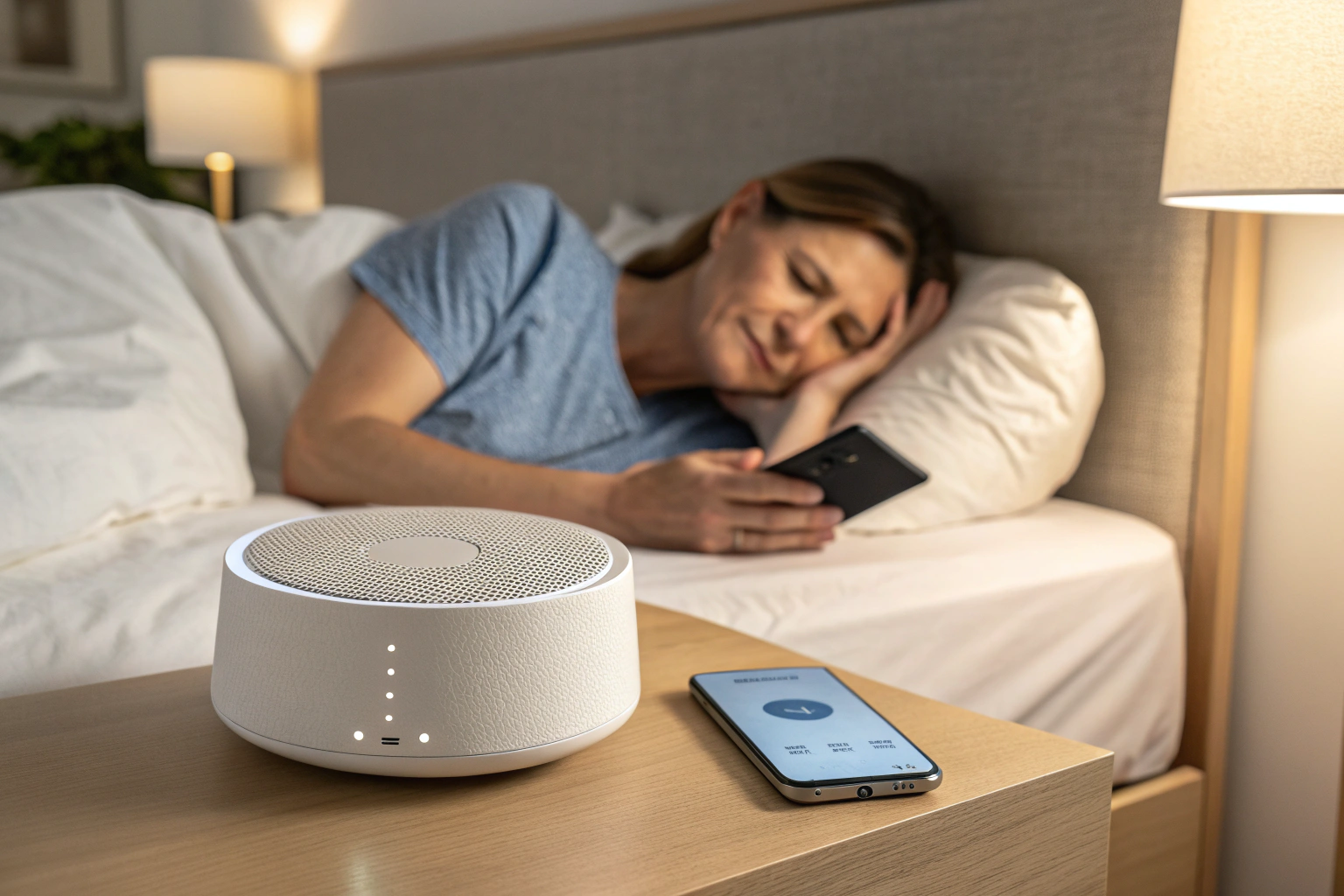
If played too loud or without sound variation, white noise may affect sleep depth, hearing, or become habit-forming.
The brain still processes sound during sleep, so poor-quality or excessive noise can cause micro-arousals.
| Risk Type | Description |
|---|---|
| Auditory fatigue | Prolonged exposure to harsh frequencies |
| REM cycle disruption | Overstimulation may reduce deep sleep |
| Sound dependency | Difficulty sleeping without white noise |
We design machines with fade-out timers, safe volume limits, and soft-spectrum options to reduce these risks.
What Do Experts Recommend?

Sleep researchers suggest using white noise for the first 60–90 minutes — the time needed to enter deep sleep.
Timers or auto-fade functions allow natural silence to return during restorative sleep phases.
| Sleep Phase | White Noise Use |
|---|---|
| Sleep onset (N1/N2) | Most effective for falling asleep |
| Deep sleep (N3) | Less sound needed |
| REM sleep | Sensitive to disruptive frequencies |
Our products include programmable timers and memory settings tailored to each user’s sleep profile.
How Do Manufacturers Prevent Overuse Problems?

High-end white noise machines are engineered for long sessions without electrical hum, frequency drift, or volume spikes.
Advanced design protects both the user and the hardware during extended use.
| Feature | Purpose |
|---|---|
| Digital sound chips | Prevent audio looping or distortion |
| Decibel-limited drivers | Ensure safe hearing levels |
| Heat-resistant components | Maintain performance during overnight runs |
Our factory tests every unit in temperature- and sound-controlled chambers to simulate full-night use.
Conclusion
White noise doesn’t need to be on all night to be effective. Short-term use helps with sleep onset, while all-night playback can be beneficial in noisy spaces — if volume and quality are well-managed.
We build our white noise machines with safety-tested features, fade options, and soft-tone profiles to protect sleep quality over time. For OEM models, private label partnerships, or to visit our facility, we welcome your inquiry.