

White noise can transform your sleep environment — if used the right way. But improper setup or poor device choice might have the opposite effect.
To improve sleep with white noise, choose a high-quality machine, set the volume below 50 dB, and place it a few feet from your bed to ensure even, non-disruptive sound.
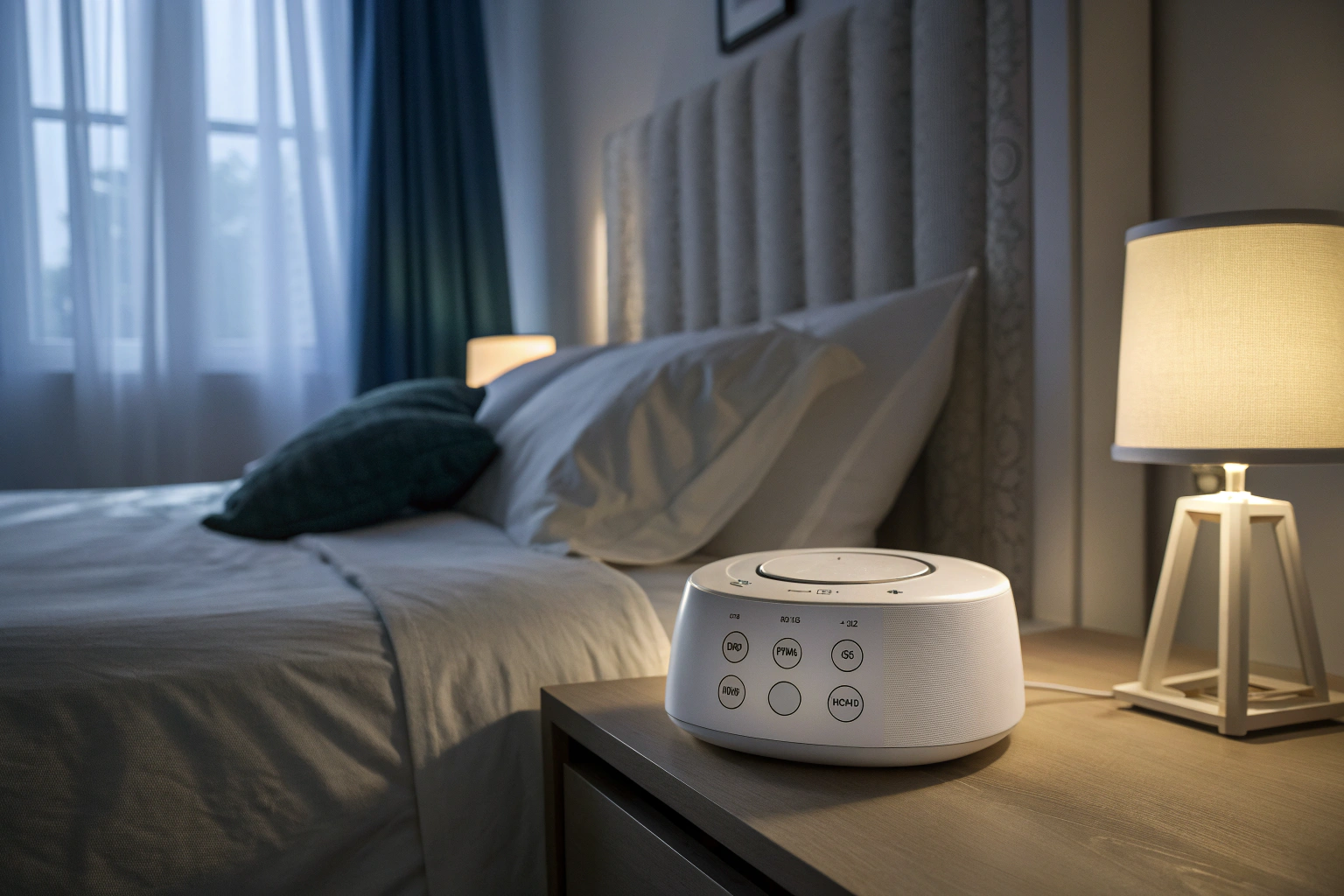
This guide explains how to use white noise effectively and safely, helping you sleep deeper, longer, and with fewer disturbances.
What Type of White Noise Works Best for Sleep?
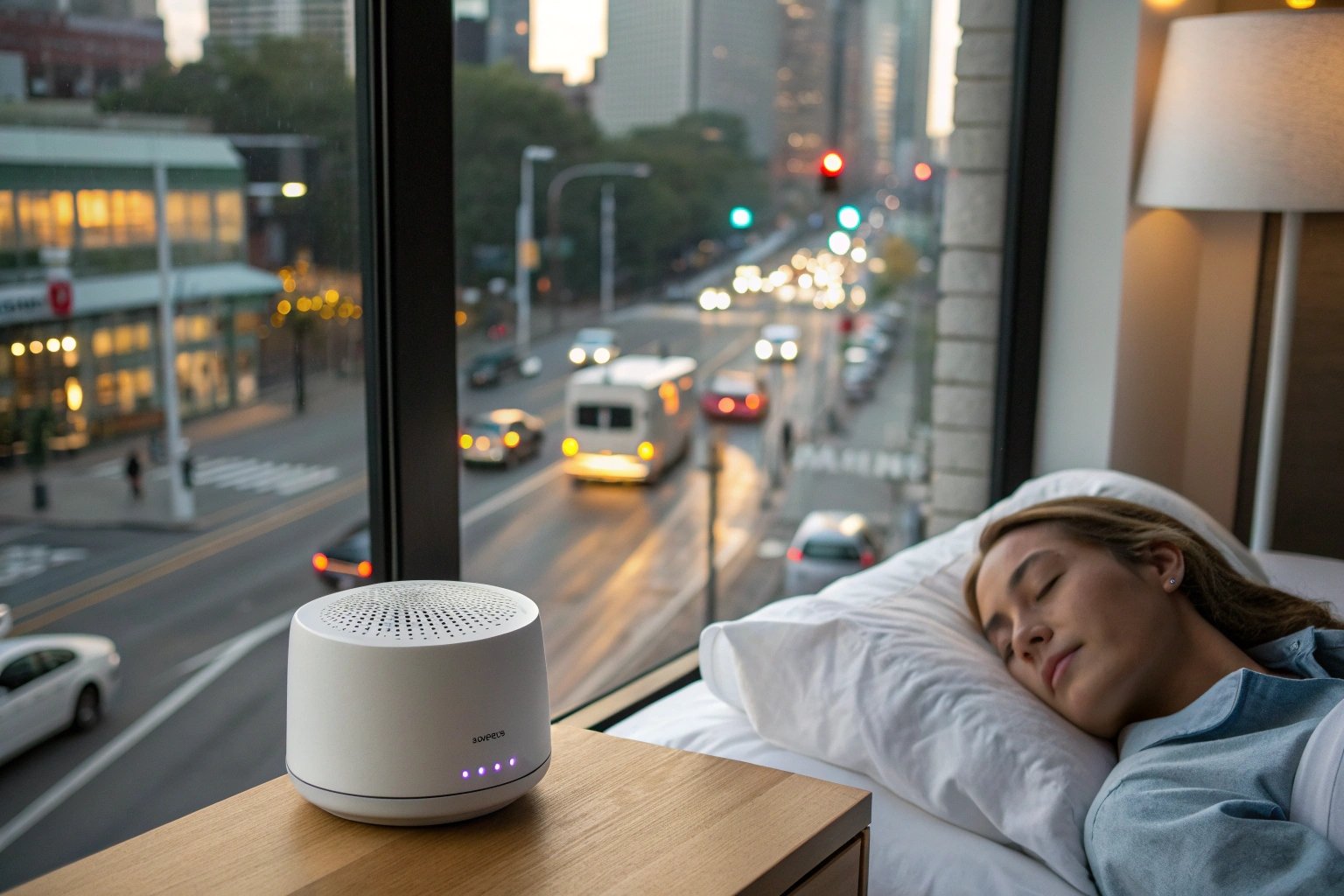
Not all white noise is created equal. Softer frequency blends, such as pink or brown noise, are more relaxing than standard white noise.
Pink and brown noise are gentler on the ears, making them more suitable for sleep, especially during long hours of use.
| Sound Type | Characteristics | Sleep Suitability |
|---|---|---|
| White Noise | Flat frequency, slightly harsh | Good for masking, less soothing |
| Pink Noise | Softer high tones, natural feel | Very calming and balanced |
| Brown Noise | Deep, low-frequency tones | Best for anxiety and deep rest |
Most high-end machines allow switching between these profiles.
How Loud Should White Noise Be?
Volume plays a major role in whether white noise improves sleep or causes discomfort.
Experts recommend keeping white noise under 50 decibels — similar to the sound of light rainfall or quiet conversation.
| Volume Range (dB) | Sleep Impact |
|---|---|
| 30–40 | Ideal — soft, non-intrusive |
| 40–50 | Acceptable for louder environments |
| Over 50 | May cause auditory fatigue or interfere with sleep |
Use built-in volume controls or external meters for best results.
Where Should You Place the White Noise Machine?
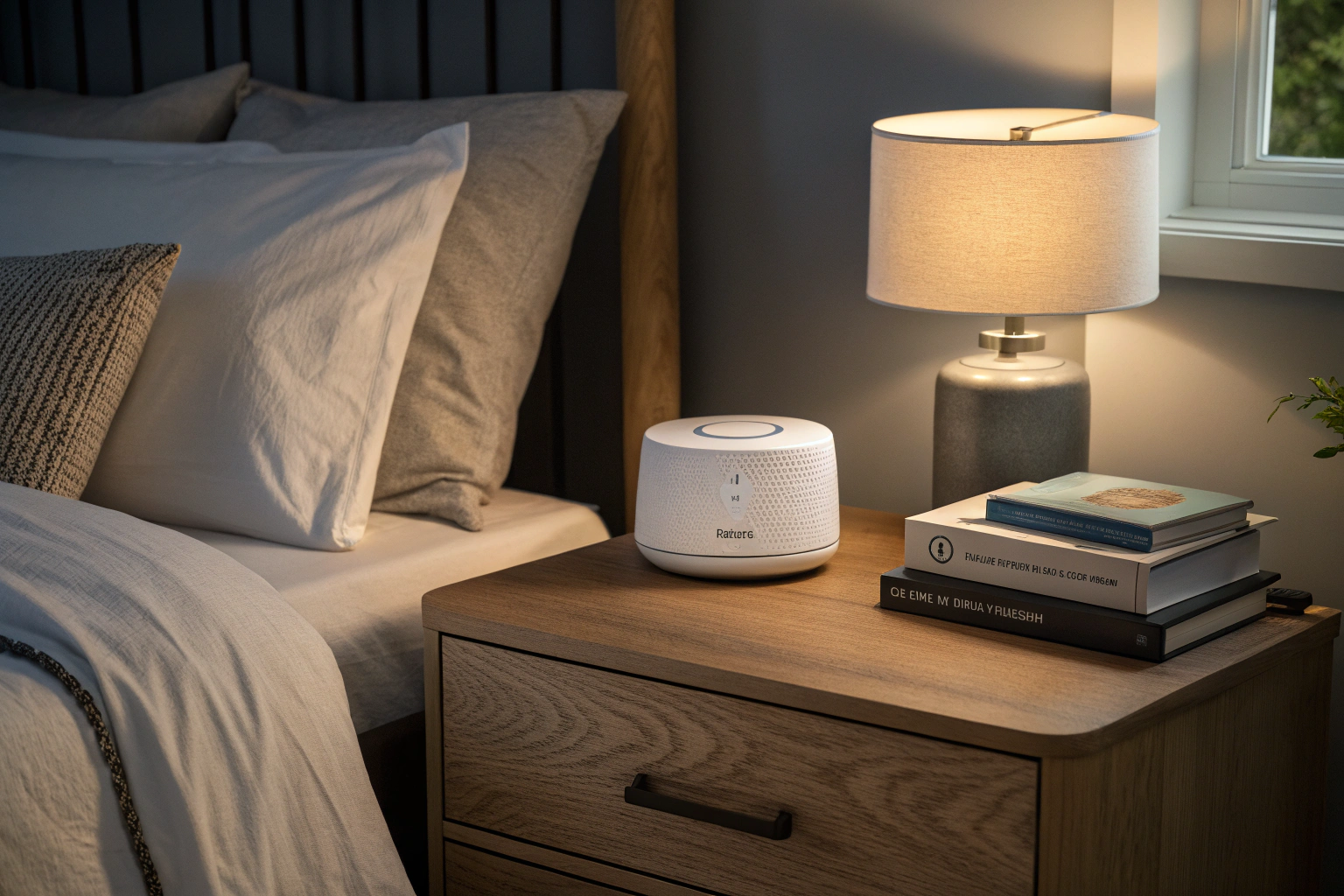
Placement affects both sound coverage and safety. Incorrect positioning can cause uneven sound or disturb your sleep.
Place the machine at least one meter from your head, angled slightly away to allow full-room diffusion.
| Placement Rule | Reason |
|---|---|
| Away from head (3+ feet) | Prevents direct exposure and harsh sound |
| Off the floor | Reduces vibration and muffling |
| Near noise source (if any) | Helps mask specific disturbances |
Elevated placement on a stable surface offers the best results.
When Is the Best Time to Use White Noise?

White noise can be used during different parts of the night depending on sleep patterns and environment.
Use it from bedtime through light sleep stages, then either let it fade out or keep it running at low volume all night.
| Sleep Need | Timing Strategy |
|---|---|
| Falling asleep | Use white noise for the first 1–2 hours |
| Noisy environment | Run continuously at low volume |
| Light sleeper | Use all night with fade-in/fade-out features |
Smart machines with timers make this process easier to manage.
Why Quality Manufacturing Matters in Sleep Devices
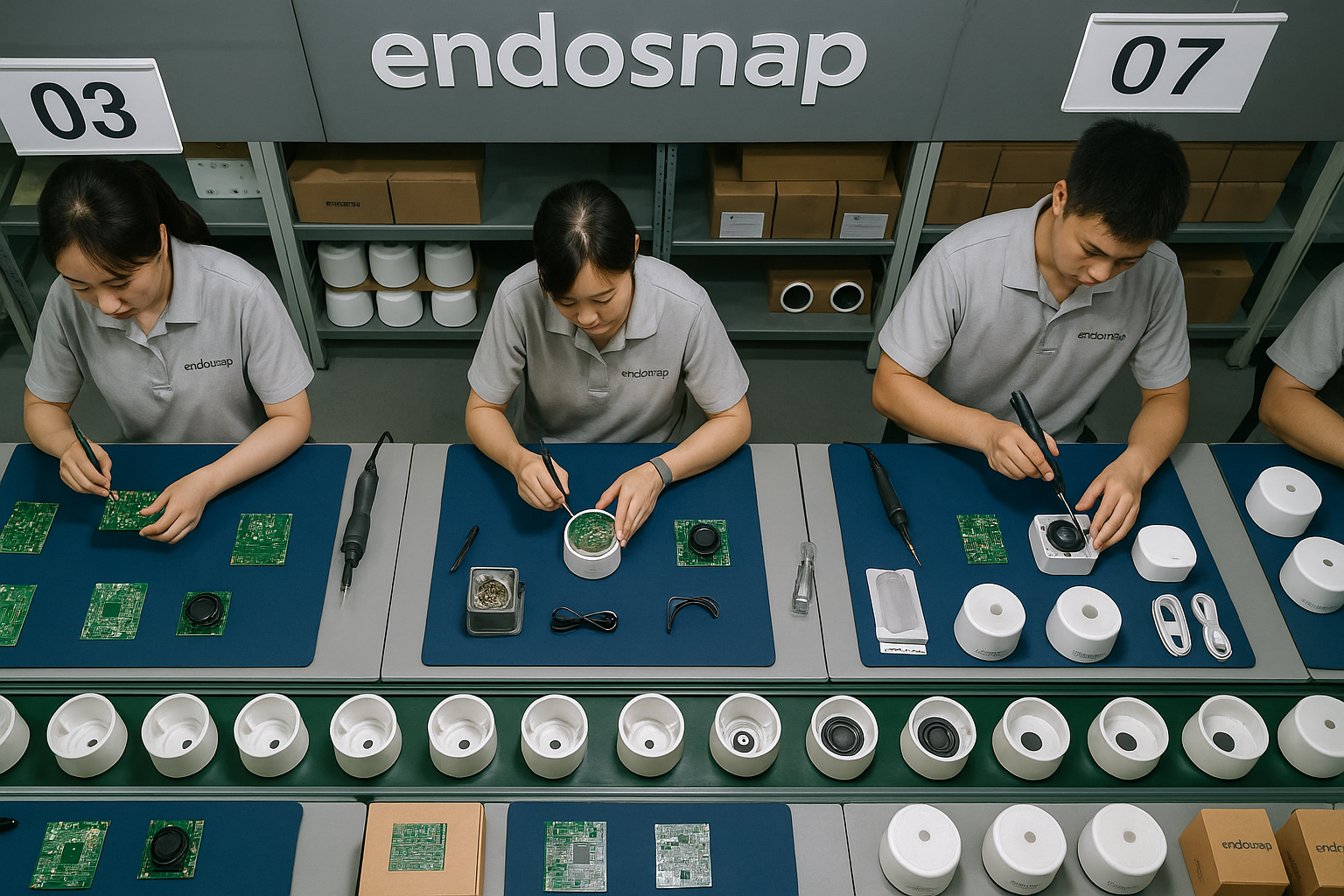
Machines that produce harsh, unstable, or distorted noise can cause irritation and disrupt rest.
High-quality machines provide smooth, stable sound output designed specifically for overnight use.
| Design Feature | Sleep Benefit |
|---|---|
| Frequency smoothing | Prevents harsh tones or static interference |
| Low power noise suppression | Keeps electrical hums or hissing to a minimum |
| Thermal stability | Ensures continuous, uninterrupted operation |
| Night-mode lighting | Prevents bright screens or LEDs from disturbing sleep |
Each of these features is tested at the factory to meet long-duration acoustic standards.
Conclusion
White noise is one of the simplest, safest tools for better sleep — when used correctly. The right sound profile, safe volume, proper placement, and stable equipment all make a difference.
Our factory specializes in building white noise machines that combine acoustic engineering with user-friendly features. Each unit is designed, tested, and calibrated for nighttime use, with customizable options for volume, tone, and duration. Clients are welcome to tour our facility, explore design options, and tailor machines for different sleep environments, from bedrooms to hotels and beyond.