

Many sound types claim to support better sleep — from static-like noise to soft natural sounds. But not all are equal in impact. Which one is truly best for health and long-term sleep quality?
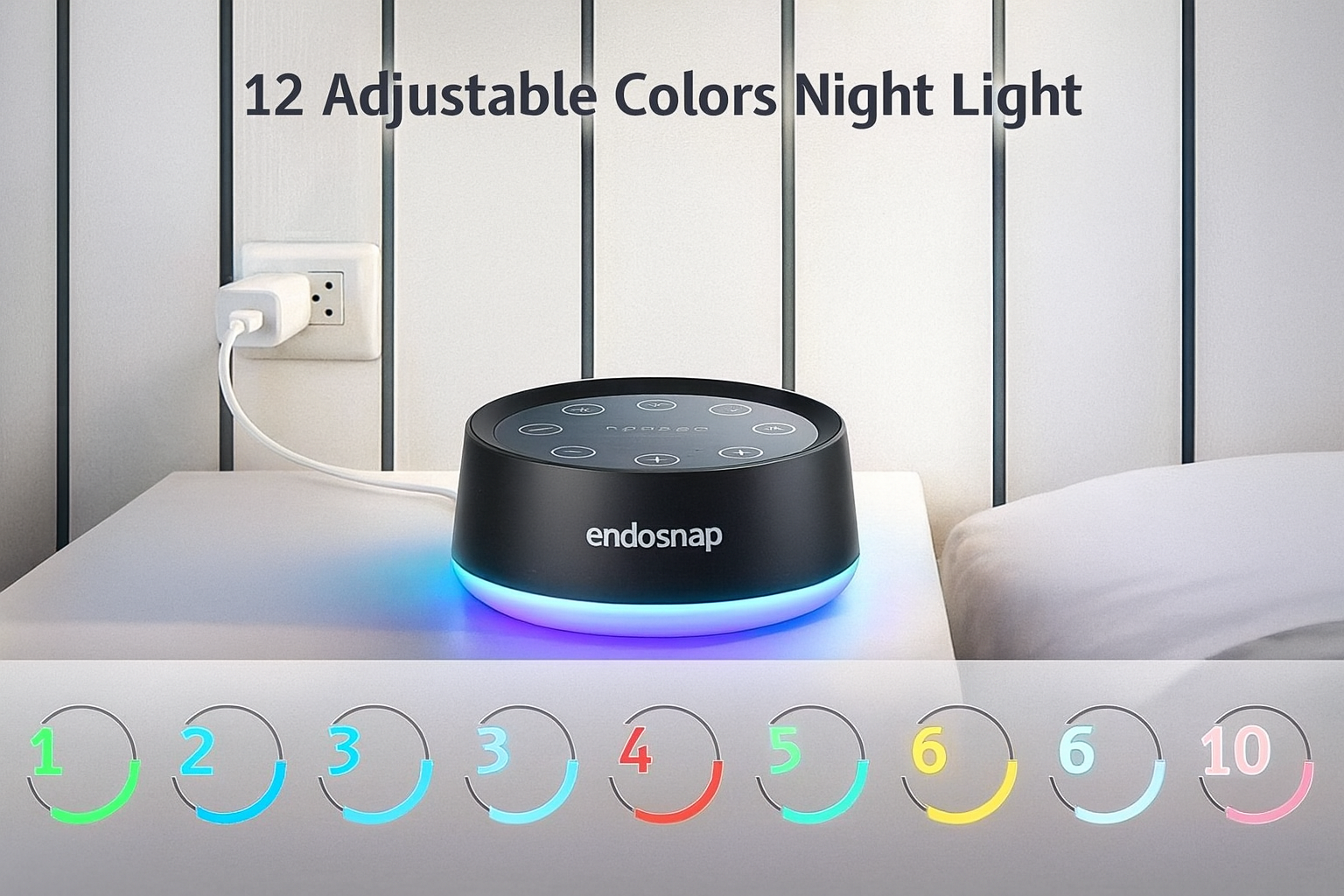
The healthiest noise for sleep is usually pink noise, which balances frequencies in a way that matches the human ear and supports deep, restful sleep without overstimulation.
The sleep-aid market includes many sound options: white noise, pink noise, brown noise, and various ambient tracks. Selecting the right one involves more than personal preference — sound quality, frequency distribution, and how the brain processes it all affect sleep health.
What Makes One Noise Type Healthier Than Another?
The difference between sound types lies in how energy is distributed across frequencies. The human brain responds differently to each. Sharp or unbalanced sounds may create stress rather than relaxation.
The healthiest noise type is one that offers a smooth, balanced sound spectrum that relaxes the brain while supporting natural sleep cycles.
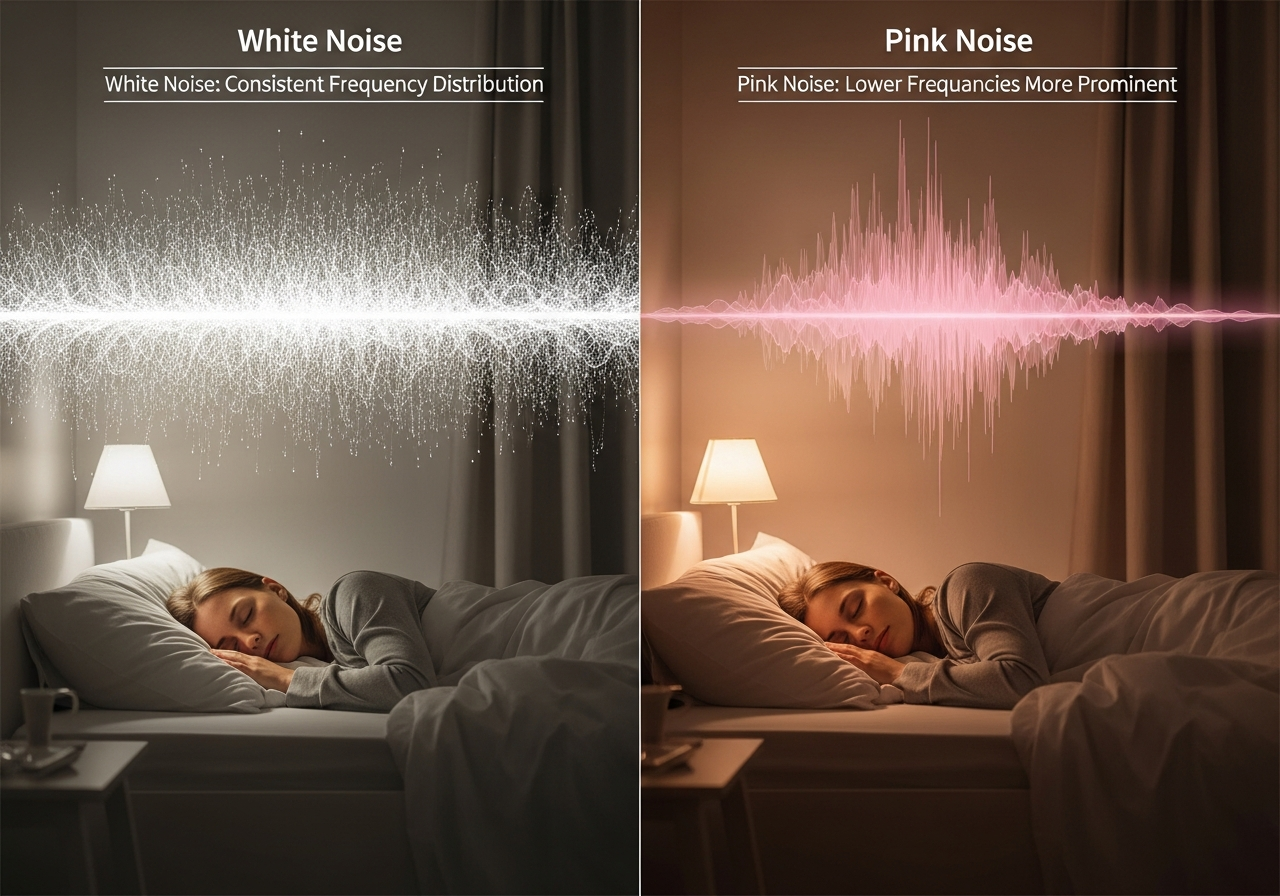
Frequency Profiles Compared
| Noise Type | Frequency Emphasis | Sleep Impact |
|---|---|---|
| White Noise | Equal across all ranges | Masks sounds, may be too sharp for some |
| Pink Noise | Less high-frequency energy | More natural, supports deep sleep |
| Brown Noise | Emphasizes low tones | Deep, calming, but less versatile |
| Nature Sounds | Varies with pattern | Relaxing but may cause cognitive engagement |
Noise types with softer high frequencies (pink or brown) are generally better suited to long-term, overnight use.
Why Is Pink Noise Considered the Most Sleep-Friendly?
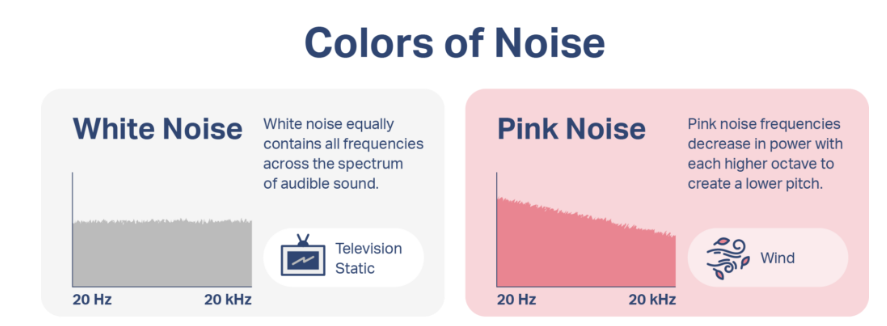
Unlike white noise, which distributes energy equally, pink noise lowers high frequencies, making the sound gentler and closer to natural ambient environments like wind or rainfall.
Pink noise promotes longer deep sleep stages and helps reduce nighttime arousals without overloading the auditory system.
Scientific studies indicate pink noise:
- Supports better slow-wave sleep (deep sleep stage)
- Promotes memory consolidation during rest
- Is perceived as less harsh than white noise
- Reduces overall brain wave complexity during sleep onset
Pink noise machines or apps must be properly tuned, as poor-quality pink noise can still contain inconsistencies or digital artifacts.
What Role Does Device Design Play in Sleep Noise Quality?
The quality of noise depends not only on type but also on how it is generated. Manufacturing directly affects sound clarity, frequency accuracy, and long-term stability.
Healthy sleep noise requires calibrated components, smooth audio output, and consistent frequency control — all achieved through careful manufacturing.
Key Manufacturing Elements
| Component | Contribution to Sound Health |
|---|---|
| Digital sound processor | Controls balance across frequencies |
| Speaker quality | Prevents distortion and harsh tones |
| Power circuit stability | Avoids hum, fluctuation, and signal noise |
| Enclosure design | Shapes how sound waves travel and reach the ear |
Advanced factories use soundproof testing labs and waveform analyzers to match output with designed profiles. Machines built with generic chipsets and low-grade speakers may claim “pink noise” but fail to deliver true health benefits.
Is Nature Sound Healthier Than Artificial Noise?
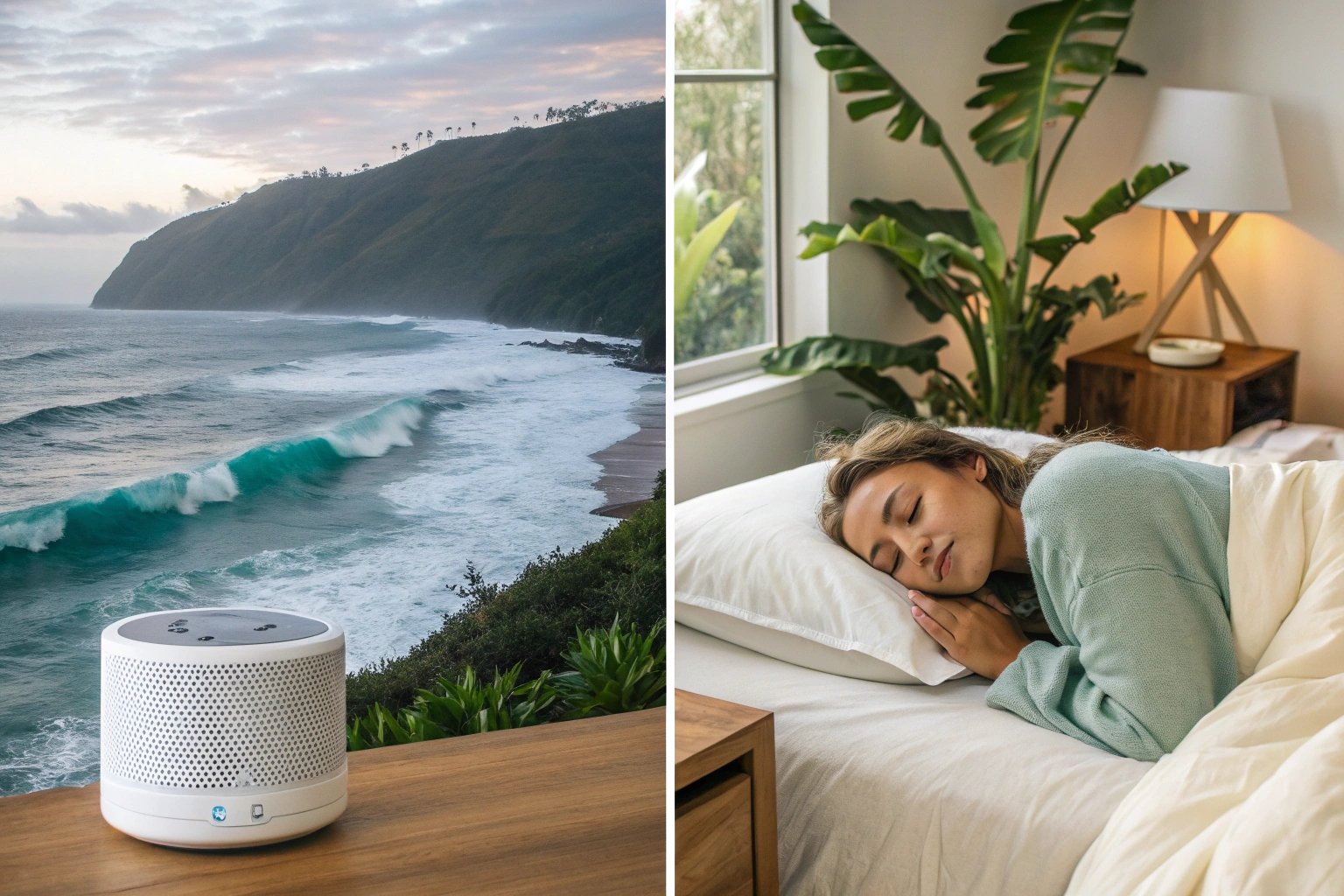
Many sleep machines offer nature tracks like rain, waves, or forest sounds. These are appealing but not always ideal for deep rest. Rhythmic variation can stimulate the brain.
Nature sounds are relaxing for short-term use but may interfere with deep sleep if loops are too short or contain sharp, repetitive patterns.
Nature sounds may be better for:
- Stress relief before bedtime
- Light sleepers who dislike static-like tones
- Environments where ambient masking is needed only at sleep onset
Machines offering hybrid options (nature + pink/brown noise) allow greater flexibility and better matching to personal needs.
How to Choose the Healthiest Noise Based on Sleep Environment?
Different rooms, noise levels, and individual sensitivity call for tailored solutions. What works in a quiet home may not apply in a city apartment.
Pink or brown noise is ideal for consistent, all-night use in most environments. Nature sounds suit short sessions or quiet rooms. White noise works in highly unpredictable noise zones.
Environment–Noise Match Guide
| Environment | Recommended Noise Type |
|---|---|
| Urban apartment | White noise or brown noise |
| Quiet rural home | Pink noise or no artificial sound |
| Shared dorm/household | Pink noise with volume control |
| Hotel or travel | Nature sounds with fade-out timer |
Devices must allow fine-tuning — volume, sound type, timer — to adapt across these use cases.
Conclusion
Pink noise is increasingly recognized for its ability to enhance sleep quality by delivering a smoother and more natural sound curve. Unlike sharper noise types, it closely mimics patterns found in the brain’s own rhythms, which may support more stable sleep cycles. When implemented through well-calibrated devices, pink noise can reduce nighttime interruptions and promote more restful sleep without overstimulating the auditory system.
In long-term use scenarios, device quality is essential. That’s why precision in sound engineering, acoustic tuning, and material selection matters throughout the manufacturing process. Every product must meet strict standards for consistency, safety, and comfort. To ensure these results, production includes rigorous aging tests, noise measurements, and quality inspections across each batch. On-site visits are welcome for those interested in reviewing the assembly process or exploring product customization — from acoustic profiles to smart control features — tailored to various application needs.