

We hear the term “white noise” often — but where does the name come from?
White noise is named after “white light,” because it contains all audible sound frequencies at equal intensity, just like white light contains all visible colors.
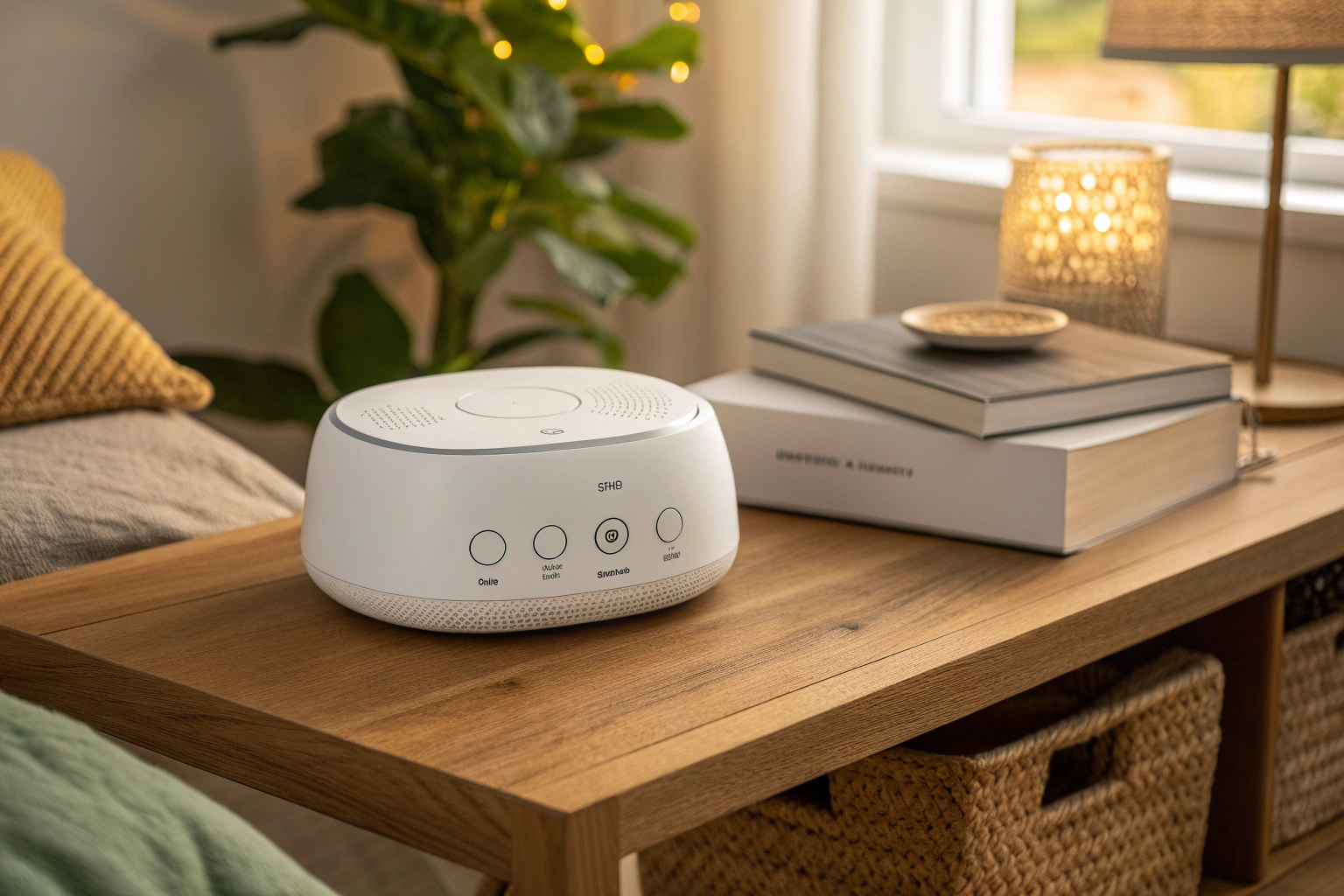
This article explains the science behind the name, how it compares to other types of noise, and how manufacturers simulate it in modern sound machines.
What Does “White” Mean in This Context?
The term “white” comes from optics. In light, white is the combination of all wavelengths in the visible spectrum. White noise applies this same idea to sound.
White noise includes all frequencies humans can hear — usually from 20 Hz to 20,000 Hz — at equal power.
| Concept | Description |
|---|---|
| White light | Mix of all colors (visible spectrum) |
| White noise | Mix of all frequencies (audible spectrum) |
Our machines use digital processors to create full-spectrum audio with smooth frequency distribution for balanced output.
How Does White Noise Compare to Other Sound Colors?
Different “colors” of noise refer to how sound energy is distributed across frequencies.
White noise has equal intensity at all frequencies. Other types, like pink or brown noise, reduce intensity at higher frequencies for a softer sound.
| Noise Color | Frequency Distribution | Sound Character |
|---|---|---|
| White noise | Flat across all frequencies | Bright, static-like |
| Pink noise | Energy decreases with pitch | Rain, wind, balanced |
| Brown noise | Heaviest in low frequencies | Deep, ocean-like |
We produce multi-sound devices so users can choose their preferred “color” for sleep or focus.
Why Is White Noise Useful?
Because it contains all frequencies, white noise masks other sounds — like talking, traffic, or sudden disruptions.
This makes it ideal for improving sleep, enhancing concentration, or providing privacy. |
Use Case | How White Noise Helps |
|---|---|---|
| Sleep support | Blocks environmental noise | |
| Office focus | Masks background conversations | |
| Privacy masking | Covers sound in open/shared spaces |
We calibrate our machines in acoustic labs to ensure even sound layering and minimal distortion over time.
How Do Manufacturers Create True White Noise?

Creating accurate white noise requires advanced audio algorithms that avoid harsh spikes or dropouts.
Professional machines generate white noise digitally through random signal generators, filtered to ensure even, smooth playback.
| Production Feature | Function |
|---|---|
| High-speed digital chips | Generate true random waveforms |
| Sound smoothing filters | Remove electrical distortion |
| Quality speaker design | Maintain balance across all frequencies |
Our factory uses certified noise meters and environmental test chambers to validate sound output against ISO acoustic standards.
Conclusion
White noise gets its name from the world of optics — like white light, it contains a full spectrum of frequencies. Its structure makes it ideal for masking unwanted noise and supporting sleep or focus.
We manufacture precision-tuned white noise machines with advanced signal generation, component testing, and customizable noise profiles. For private labeling or OEM partnerships, you're welcome to contact our team or visit our facility.